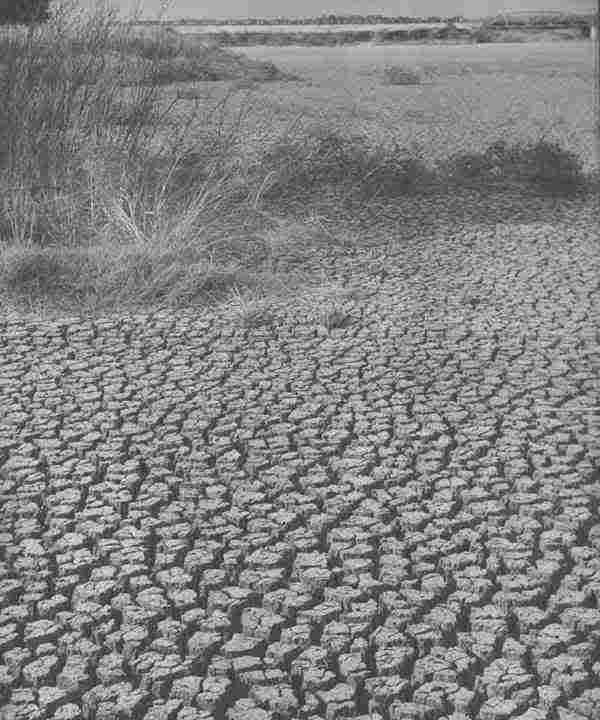
The Dust Bowl of the 1930's were a series of dust storms upon the southern part of the Great Plains. After World War I, there were less demands for farm goods from Europe, causing the prices of these goods to rise. Since the prices rose and the demand for these goods were not high, many farmers went in debt. However, they produced more crops, thinking that the demands would eventually rise up again. This caused the topsoil of the farmlands to be blown away by dust, especially unhealthy in a period of a drought. Not having any use with their land, many from Oklahoma (also referred to as "Oakies") fleed to California, where they believed that greater opportunities were presented upon them. Also, the U.S. was under a Great Depression, almost requiring banks to force families out of their land.
This connects to The Grapes of Wrath in that Steinbeck describes the dust as being a part of the people they inhabited. When tractor drivers claimed that they were not to blame for forcing tenants out of their land, Steinbeck emphasizes that the banks and economical state of the country was at a downfall. In Chapter 5, the tenants asked what the banks were going to do with their land, and they found out that the banks wanted to grow more cotton on the land while they could, so they could sell it in the market. The tractor drivers holding this information also admitted that this would kill the land itself, but they had to do it in order to gain profits. Just like many families in the 1930s, the Joads were forced out of their own home, having to go to Uncle John's place in order to live. Knowing that there are greater opportunities in California, they decide to move out of Oklahoma, and go on a journey to California. Therefore, the Joad family can also be referred to as "Oakies".

No comments:
Post a Comment