Sunday, April 6, 2014

Personal Philosophy

“Be who you are and say what you feel, because those who mind don’t matter, and those who matter won't mind” -Dr. Seuss. As a growing teenager, many adults tell you to just “Be yourself”, automatically expecting you to follow their advice as if it were that easy; as if the pressures asserted by your peers should not phase you at all. Rather than showing others who you truly are, you find that it is much easier to create another persona, one that would please everyone and make them happy. But on the process of making this entirely different person, you are distancing away from who you truly are. Nobody sees your true self aside from you, because you fear that you will not have anyone by your side if you show even just a glimpse of your perspectives in life. However, if we live our life trying to please everyone else, people produce a high range of expectations that we feel obligated to fulfill. And when we fail to succeed in achieving what is expected of us, it causes us to fall into a deeper self-resentment, enlarging the fear of showing others our true selves. Despite that sense of obligation we feel when expectations are flooded on us, in reality, we have no obligation to fulfill these presumptions that is inflicted upon us. This is why I think it is very important to be yourself, and make decisions based off of what will make YOU happy, because living a life set upon making everybody else happy can only prevent us from being happy ourselves. 
After freshmen orientation, I made it a priority to become really good friends with the people that I had just met. It was my high school goal--nothing was going to get in the way of it--even if it meant that I would branch off from really good friends from middle school. Even if it meant hiding who I really was and putting up a different personality than what I had before. I had to make a good impression, after all. Freshmen year started with a bang; I was meeting new people, and my surfaced personality only brought more and more people into my life. I made more and more friends, but none of them really knew who I was inside. Those who grew closer to me got to know the side that I have been hiding, and they did not mind at all. And as the year progressed, my true colors started to show—not that they were terrible—and I became happier with my life, but I seemed to have failed most people’s given perception of me. There was this group of girls, girls that I was never particularly close to, but hung around the same area that I did. At the time, my friend Janette was one of their best friends. She notified me of the trash talking going on behind my back, and as I clearly remember, they referred to me as a “wild child”, and a “bad influence” for being carefree and living life to the fullest. Extremely angered by these assumptions of me, I realized that I spent most of my time pleasing these people—very unhappy along the process—and when I acted upon my happiness, it only seemed to disappoint them. These girls were not my friends. And anyone who did not accept me for ME, is not worth being “friends” with. I failed to see that I did not need more people in my life; all I needed were those who were already there, and these people? They have—and still do—love me for who I really am. 
Although lots of times it is really frightening to show the world who you really are, just know that there will always be people who will stand by you for YOU. Through every fight, success, failure, obstacles, and whatever else the world offers, the only people you will need in your life are true friends. They are the people who will never ask you to change for them, or to put up a fake personality in order to please everyone else. They are the people who will help you get up when you fall, and will applaud at the sight of you reaching for the stars. They are the people who will show you that being yourself is the greatest you will ever be, and that you do not need to be anybody else. They will love you for who you are. And as AndrĂ© Gide profoundly states, “It is better to be hated for what you are than to be loved for what you are not.” 

Monday, March 24, 2014

Chapter Chunks 16-19, Assignment D

Family/Unity
"'I know,' Ma said. 'I jus' can't get it outa my head what store she set by a nice funeral. Got to forget it.'" (241).

When Grandpa died, the Joad family insisted upon giving him a proper burial and a prayer before they left him. The Joads were much more affected with his death, although along the road to California, they lost their empathy towards him and focused more on their survival. However, his death proved to be a lot more value than Granma's death. When Granma died, the whole family agreed to leave her at the coroner's office in Bakersfield, with no proper burial or a prayer. This idea of Granma's meaningless death is shown through Ma, who always made it seem as if family should be valued and stuck together until the end. Ma expresses a sense of guilt for leaving Granma in the coroner’s office, but she does not put up a fight with Pa in leaving her. Instead, she chooses to forget about leaving Granma and also forget how she would have wanted to be treated when she died. This reveals that the Joad family have created a distance between them, knowing that the family is not to resist when one desires to leave in the future, knowing that the group of their family left will be better off with less people to feed and less people to worry about. Since Ma is the foundation of the family and is the one who usually made the effort to keep the family together, her perspective in the family breaking up only encourages the Joads to lose faith in their family staying as one.  Because Ma allowed Pa and her sons to leave Granma, she gives them the impression that she does not care if one person dies or leaves on their own. Ma sees that the less people they have to feed, the less money they will be spending. Instead of sticking to their morals and paying Granma with respect by even at least saying a prayer for her, the Joads load up their stuff and leave her. 

Sunday, March 16, 2014

Chapter Chunks 16-19, Assignment A

 
One of the most important rules that the families along the highway followed is rule #2, which forbids the fouling or wasting of water in any way. This contributes in a lot of ways to the people's camping societies in that water was scarce to begin with while traveling along Route 66. Water is a very important necessity to the human body, required to handle the body's processes. For one, it supplies the body with many nutrients required in order to survive. During the blazing heat along the camps, water is especially needed to prevent dehydration, which can be a result of death for many. The scarcity of water portrays a disrespect if one were to waste or play with water. By forbidding this action, the families are able to preserve lots of water not only for themselves, but also other families that do not have this necessity. Since the families make it their job to help other families, preserving a basic, but very important, necessity is essential to function in their everyday lives along Route 66.

Also another very important rule in the campers’ society is rule #3, which forbids the eating of rich foods when one camper right next to them is going hungry. As displayed by their morals, the families traveling along Route 66 make it a point to help one another. One enjoying a delicious and appetizing meal while another is going hungry can considered to be disrespectful, which is exactly why it is forbidden. This rule requires those who have a luxurious meal to share them to a starving traveller alongside them, which enables their society to be very giving and helpful to one another. By having this rule, it implies that with everything else, one must help another man (or a woman) in need.

Chapter Chunk 11-15, Assignment C*

Dear Diary, 

Today was just like any other day in our little hamburger stand/gas station along Route 66. As usual, I was staring out the window, waiting for customers to walk in while Al cooks up meals. 

I do all sorts of things to attract customers. I make myself look very presentable, just in case any truck drivers come through. I even show off a little bit of skin sometimes, knowing that's what they like to see. I smile and laugh at their unfunny jokes, pretending that they are the most hysterical things I've ever heard. Al smiles sometimes, even though he's usually quiet while cooking. He never laughs though. He only looks up from his spatula if I say something lively enough. 

All of this, just for a tip that I deserve very much. That's why I don't like cars: they try to take advantage of our good nature and utilities. They use up our napkins, drop them on the floor, complain that our soda isn't cold enough, and blame it all on me. Then they'll tell everyone else that our little shack is no good. This is why I call them shitheels. 

But today, Big Bill the Rat came along with his friend, Bing Crosby, for a stop before continuing to drive out. They were driving a big transport vehicle and I got very excited, knowing that they'd give me tips for our services and all. We caught up for a little, and then this sedan pulled up. A man and two little boys came out with him, and he asked me for water. I was irritated because I knew this man is going to be THOSE kind of people--shitheels. 

He asked me for water, and as I watched him drink from our hose, he asked me for a loaf of bread. I felt really annoyed because for one, we are not a grocery store. And also, he asked to pay for the loaf for only 10 cents, when they are usually sold for 15. I only agreed to let them have it because Al told me to just give it to them, which I found pretty unusual considering he just shuts up his mouth and cooks. 

Before he paid for the loaf of bread, he asked me if the striped candy that his two boys were drooling about were a penny apiece. My conscience getting the best of me, I told him that it was a penny for two, even though it was really a nickel apiece. After that, they left our little shack and went their way. 

Touched by the gratitude in which I did not want to offer the man and his two boys, Big Bill and Bing both decided to give me tips. Because of this, I learned that maybe I shouldn't be so mean to shitheels. I should be ESPECIALLY nice to them when truck drivers are around, because if I impress those truck drivers enough by being nice to these shitheels, the truck drivers will give me tips. Sometimes maybe even large tips. 

Greedy for more money, 
Mae

Thursday, March 13, 2014

Chapter Chunks 11-15, Assignment D*

True Life Connections


In the novel, the Joads question Casy's motives in possibly knowing that Grampa was going to die eventually on the way to California. In his defense, Casy maintains, "He was foolin', all the time. I think he knowed it. He knowed it. You fellas can make some kinda new life, but Grampa, his life was over an' he knowed it. An' Grampa didn' die tonight. He died the minute you took 'im off the place" (146). He is indicating that the overdose with the cough syrup, the heat, or any other physical factors was not the actual cause of Grampa's death, but that he had already died from being taken off the land that he dearly loves. 

Casy's statement about Grampa's death hugely impacted my views about home and one's land because I know what it feels to have to pack up and go without any choice, and move to a completely different place than where I have lived most of my life. Since Grampa grew up in Oklahoma, on the farmland that even his father grazed, he knows that this is where he belongs. He has lived most of his life on this land, working and forming his new family, which makes him feel as if there is no other place he can call home. Although California presents new opportunities for him and his family, he refuses to leave because he does not want to leave behind a place that has lots of sentimental value towards him. Because of old age, he does not want to leave behind the memories that he has made with this land, knowing that he will surely forget them because he is leaving behind the actual objects and the environment in which those memories occurred in. 

In relation to Grampa's feelings and situation, I too, have had to leave behind my own country (The Philippines) to move to California, which will supposedly provide a more successful life for my family and I. Similar to Grampa, I had feelings of fear knowing that I will be surrounded with completely different people in a completely different environment. I remember feeling angry, since I was not given the choice of moving, just like the Joads automatically assumed that Grampa would love to go to California. The Phillipines is my home country, and I was very devastated to find out that I had to leave behind the places and the many people that I loved the most. I felt as if a little part of me had died when I left, which made me realize that if I had lived up to Grampa's age in the Philippines, I may have just died completely, the same exact way Grampa did when he was taken off the land. 

Thursday, March 6, 2014

Chapter Chunks 1-10, Assignment F

Faith

In The Grapes of Wrath, Steinbeck revolves Reverend Casy into the theme of faith. Casy reveals that he no longer preaches, since he found a new way of life. While speaking to Tom Joad, he reasonably asserts, "I figgered, 'Why do we got to hang it on God or Jesus? Maybe,' I figgered, 'maybe it's all men an' women we love; maybe that's the Holy Sperit--the human sperit--the whole shebang. Maybe all men got one big soul ever'body's a part of'" (24). Joad maintains that people do not need to rely on God or Jesus, since they may just be tales of fiction. He is further saying that Jesus nor God do not actually exist, that the "Holy [Spirit]" that humans often refer to is actually just the "human [spirit]", rather than being something else that is holy. Through Reverend Casy, Steinbeck emphasizes that although he has lived most of his life as a preacher, he still came to another point in life where he realized that he no longer believes what he used to preach. With this, he is able to prove that those who believed in a certain faith initially, is not tied down to that faith forever.

In Chapter 8, Reverend Casy gets the opportunity to say grace near the Joads. Although he believes in something that contradicts the beliefs of the Joads, he agrees to say grace before they ate supper. As he preaches, he conveys:
I got to thinkin' how we was holy when we was one thing, an' mankin' was holy when it was one thing. An' it on'y got unholy when one mis'able little fella got the bit in his teeth an' run off his way, kickin' an' draggin' an' fightin.' [...] An' then I got to thinkin' I don't even know what I mean by holy. (81)
Casy's role in the novel develops into his character being an allusion to Jesus Christ. As he sat down with the Joads, he acts as Jesus Christ on his last supper. The Joads act as the 12 disciples, listening to Casy say grace. His role in the novel as Jesus Christ is portrayed in his change of faith, similar to how Jesus was a Jew, and his beliefs eventually evolving into a different religion or a system of ideas on his own. In this chapter, he reveals his lost of faith, formulating that he no longer knows what it means to be "holy". This is shown in his realization that humans were defined to be holy when they were righteous, and they became "unholy" when they are inconsiderate, selfish, or performing terrible actions. He realizes that this statement of what defines an "unholy" person limits humans' impulse to make mistakes and ignorance to certain aspects of life. With this, he portrays the faith in which he lost through a series of epiphanies.

Wednesday, March 5, 2014

Chapter Chunks 1-10, Assignment A*


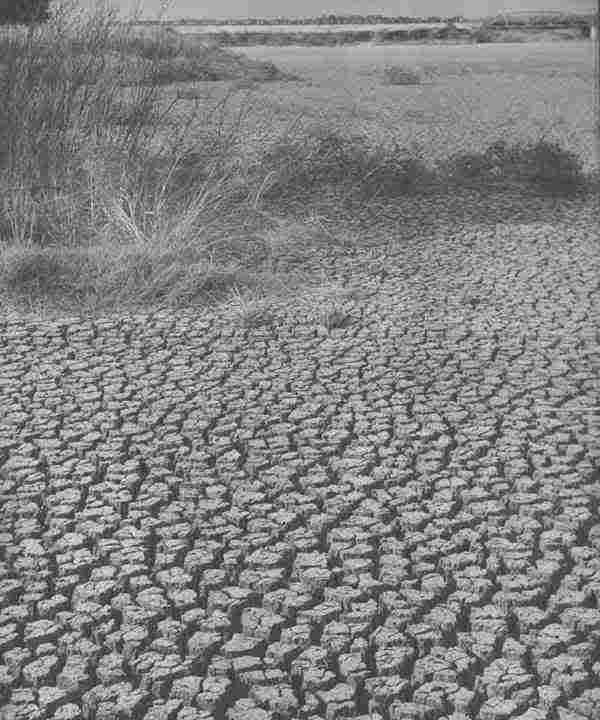
The Dust Bowl of the 1930's were a series of dust storms upon the southern part of the Great Plains. After World War I, there were less demands for farm goods from Europe, causing the prices of these goods to rise. Since the prices rose and the demand for these goods were not high, many farmers went in debt. However, they produced more crops, thinking that the demands would eventually rise up again. This caused the topsoil of the farmlands to be blown away by dust, especially unhealthy in a period of a drought. Not having any use with their land, many from Oklahoma (also referred to as "Oakies") fleed to California, where they believed that greater opportunities were presented upon them. Also, the U.S. was under a Great Depression, almost requiring banks to force families out of their land. 

This connects to The Grapes of Wrath in that Steinbeck describes the dust as being a part of the people they inhabited. When tractor drivers claimed that they were not to blame for forcing tenants out of their land, Steinbeck emphasizes that the banks and economical state of the country was at a downfall. In Chapter 5, the tenants asked what the banks were going to do with their land, and they found out that the banks wanted to grow more cotton on the land while they could, so they could sell it in the market. The tractor drivers holding this information also admitted that this would kill the land itself, but they had to do it in order to gain profits. Just like many families in the 1930s, the Joads were forced out of their own home, having to go to Uncle John's place in order to live. Knowing that there are greater opportunities in California, they decide to move out of Oklahoma, and go on a journey to California. Therefore, the Joad family can also be referred to as "Oakies".